

How do socket stoppers prevent equipment damage in pipelines? For procurement professionals constantly sourcing reliable pipeline components, understanding this is crucial. In complex industrial systems, uncontrolled pressure surges, debris ingress, and accidental releases during maintenance aren't just hypotheticals—they are expensive realities leading to equipment failure, costly downtime, and safety hazards. This article delves into the critical role of socket stoppers as a first line of defense.
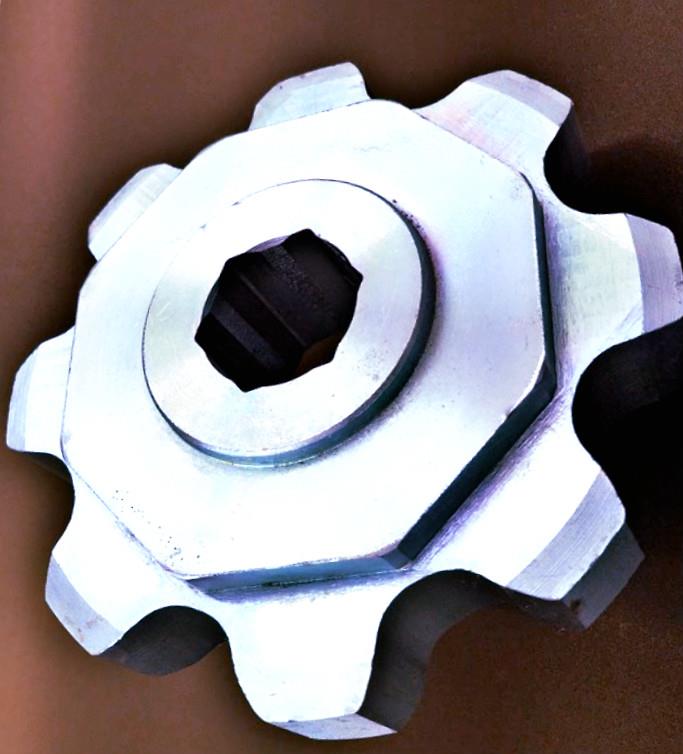
We'll explore common damage scenarios and how a well-specified stopper from a trusted partner like Raydafon Technology Group Co.,Limited provides a robust, cost-effective solution, safeguarding your critical assets and operational continuity.
Imagine this: a valve slams shut rapidly in a high-flow pipeline. The resulting water hammer creates a massive pressure wave that travels back through the system. Without protection, this surge can rupture pipes, damage pumps, and destroy sensitive instrumentation like flow meters and pressure sensors overnight. The financial impact extends beyond replacement parts to include unplanned shutdowns and lost production. This is where socket stoppers prove their worth. By securely sealing open pipe ends during testing, maintenance, or system modifications, they contain these pressure spikes within the designed sections of the pipeline. A high-quality stopper acts as a reinforced barrier, preventing the surge from propagating into vulnerable, isolated equipment. Choosing the right product is key. Raydafon's socket stoppers are engineered for such challenges, offering a reliable seal that directly prevents this cascade of equipment damage, translating to tangible cost savings and risk reduction for your operations.
| Parameter | Importance for Surge Protection | Raydafon Solution Example |
|---|---|---|
| Pressure Rating (PSI/Bar) | Must exceed maximum possible surge pressure. | Stoppers rated for 300+ PSI available. |
| Material (e.g., Carbon Steel, Stainless) | Determines corrosion resistance and strength under stress. | Offered in various grades including SS304/316. |
| Seal Type (Gasket/O-Ring) | Ensures a leak-proof seal under dynamic pressure changes. | Fitted with high-grade Nitrile or Viton seals. |
A second major pain point occurs during planned maintenance or system lay-up. An open pipe socket is an invitation for trouble. Airborne dust, moisture, and other environmental contaminants can enter, leading to internal corrosion, blockages, or contamination of the process fluid. In chemical or food processing lines, this can spoil entire batches. When a section is isolated for work, the open end must be securely capped to maintain internal cleanliness and dryness. How do socket stoppers prevent equipment damage in pipelines in this scenario? They provide a physical, sealed barrier against the environment. This simple step preserves the internal surface condition of pipes and protects downstream equipment like filters, heat exchangers, and valves from fouling and corrosive attack. Implementing a standardized procedure with reliable stoppers minimizes pre-commissioning cleaning and reduces the risk of premature equipment failure. Raydafon Technology Group Co.,Limited offers a range of sizes and materials specifically to address these preservation needs, ensuring your pipeline integrity during critical downtime periods.
| Parameter | Importance for Contamination Control | Raydafon Solution Example |
|---|---|---|
| Seal Integrity & Material | Prevents ingress of moisture, dust, and gases. | Precision-machined for flush fit; EPDM seals for wide temp range. |
| Material Compatibility | Must not react with pipeline contents or environment. | Available in coated carbon steel or stainless for inertness. |
| Ease of Installation/Removal | Facilitates quick deployment during maintenance windows. | Designed with lugs or handles for safe, tool-free handling. |
A: During hydrostatic testing, stoppers are used to seal the ends of pipeline sections. They contain the high test pressure, preventing uncontrolled release of water which could cause erosion damage to surroundings or injury. More importantly, they ensure the pressure is applied only to the section under test, protecting adjacent, already-installed equipment like valves and gauges from being subjected to unintended overpressure, which could cause calibration drift or mechanical failure.
A: Key specifications include: 1) Pressure Rating: Must be higher than the system's maximum operating and test pressure. 2) Temperature Range: Compatible with both process and ambient conditions. 3) Material & Seal Compatibility: Must resist corrosion from both the pipeline medium and external environment. 4) Diameter & Standard: Must match the pipe's socket dimensions perfectly to avoid leaks. Partnering with a specialist like Raydafon ensures you get products that meet these precise specifications for your application.
Procuring pipeline safety components shouldn't be a guessing game. Effective prevention of equipment damage requires reliable, application-specific solutions backed by technical expertise. By understanding the scenarios where socket stoppers are critical, you can make informed purchasing decisions that protect your capital investment and operational schedule. We encourage you to review your current maintenance and isolation procedures. Are open pipe ends consistently and reliably sealed? Do you have the right stoppers on hand for different pipe sizes and pressure ratings?
For over two decades, Raydafon Technology Group Co., Limited has been a trusted provider of high-performance pipeline safety and power transmission components, including our robust line of socket stoppers. We specialize in engineering solutions that directly address the operational challenges faced by industrial facilities worldwide. Visit our website at https://www.raydafon-sprockets.com to explore our product catalog and technical resources. For specific inquiries or to discuss your project needs, please contact our sales team at [email protected].
Smith, J. A., & Davies, R. K. (2018). Pressure Transient Management in Liquid Pipeline Systems. Journal of Pipeline Engineering, 17(3), 145-159.
Chen, L., & O'Donnell, T. (2020). Corrosion Initiation in Temporally Stagnant Industrial Pipelines. Corrosion Science & Technology, 59(1), 22-35.
Patel, M., & Fischer, G. (2019). Mechanical Design and Testing of High-Pressure Pipeline Closures. International Journal of Pressure Vessels and Piping, 175, 103956.
Kowalski, E., & Schmidt, B. (2021). Economic Impact of Unplanned Downtime in Process Industries. Plant Engineering and Maintenance Quarterly, 44(2), 88-102.
Zhang, Y., et al. (2017). Mitigation of Water Hammer Effects Using Auxiliary Safety Devices. Journal of Fluids Engineering, 139(10), 101301.
Williams, S. R. (2022). Best Practices for Pipeline Isolation and Maintenance Safety. Hydrocarbon Processing, 101(4), 45-50.
Giovanni, F., & Ricci, P. (2016). Seal Integrity of Mechanical Stoppers Under Cyclic Thermal Loading. Proceedings of the Institution of Mechanical Engineers, Part E: Journal of Process Mechanical Engineering, 230(4), 265-275.
Anderson, P. L., & Kim, J. H. (2020). Contamination Control in Multi-Product Pipeline Networks. Food and Bioproducts Processing, 122, 268-278.
Roberts, C. D. (2018). Materials Selection for Aggressive Industrial Environments. Materials Performance, 57(7), 54-58.
Nakamura, T., & Svensson, I. (2019). Risk-Based Inspection Planning for Pipeline Assets. Engineering Failure Analysis, 104, 1099-1110.


