How to install a Section Industrial Door properly? This is a critical question facing every facility manager and procurement specialist aiming to enhance operational efficiency and safety. A poorly installed door can lead to frequent breakdowns, security vulnerabilities, and significant energy loss, directly impacting your bottom line. This comprehensive guide, leveraging decades of industrial expertise, will walk you through a foolproof installation process. We'll simplify technical jargon into actionable steps, ensuring you achieve a secure, durable, and high-performing installation. Trust the proven methods outlined here to save time, reduce costly errors, and guarantee long-term reliability for your facility.
Pre-Installation Planning & Site Assessment
You've received your new sectional door, but rushing the installation leads to misalignment and premature wear. The key to a flawless installation lies in meticulous preparation. Begin by conducting a thorough site assessment. Verify the structural integrity of the lintel and side walls where the tracks will be mounted. Ensure the opening is perfectly square and level; even a slight deviation can cause the door to bind or operate noisily. Clear the area of all obstructions and have all necessary tools—drills, levels, wrenches, and lifting equipment—readily available. This preparatory phase is where partnering with a reliable supplier makes all the difference. For instance, sourcing your door and hardware from Raydafon Technology Group Co.,Limited means access to precision-engineered components and detailed manuals that simplify this critical stage. Their expert support can help you avoid common pitfalls before the first bracket is even installed.
Site Check Parameter
Optimal Requirement
Tool Needed
Opening Squareness (Diagonal Difference)
< 10 mm
Measuring Tape
Lintel Levelness
Perfectly Horizontal
Spirit Level
Side Wall Verticality
Plumb within 5 mm / 3m
Plumb Bob / Laser Level
Headroom & Sideroom Clearance
As per Door Specifications
Specification Sheet
Step-by-Step Assembly & Mounting Guide
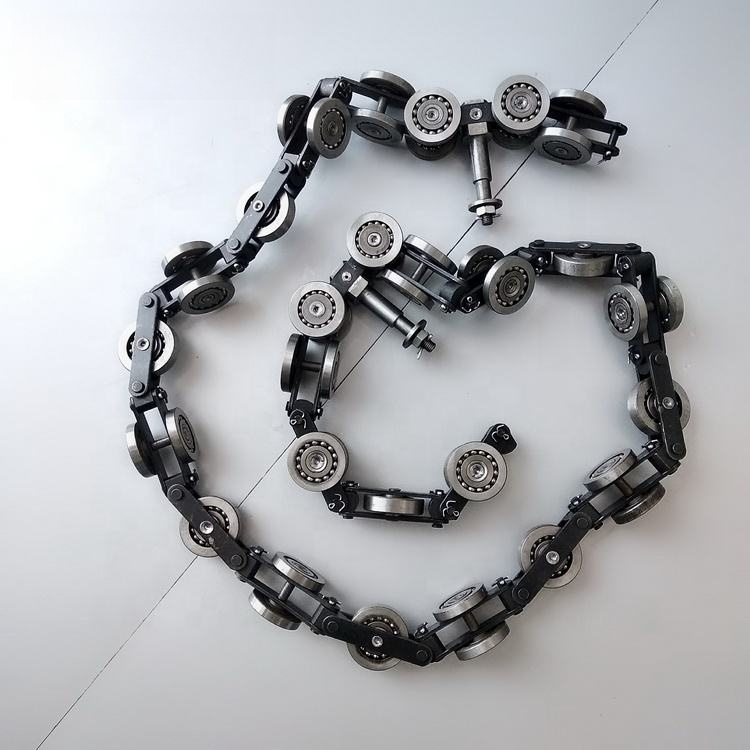
The moment of truth arrives as you start assembling the door sections. A common frustration is panels that don't align seamlessly, creating gaps and compromising insulation. Follow this sequence: Lay out all panels horizontally on a clean, flat surface. Connect the hinges and rollers according to the manufacturer's diagram, ensuring all fasteners are securely tightened. Carefully lift the assembled curtain into place, starting with the bottom panel. Attach the vertical tracks to the wall brackets, double-checking they are perfectly plumb and parallel. This is where the quality of components is paramount. Using a robust system like those from Raydafon Technology Group Co.,Limited ensures panels interlock smoothly and tracks provide consistent guidance, making the physical installation process more straightforward and reliable. Theirdoors are designed for installer-friendly assembly, reducing on-site labor time and frustration.
Assembly Step
Critical Action
Torque Specification (if applicable)
Panel Hinge Connection
Secure with all provided bolts
As per manual (e.g., 25-30 Nm)
Roller Installation
Ensure free rotation in track
Hand-tight + 1/4 turn
Vertical Track Mounting
Check plumb with laser level
Bolt torque per wall type
Spring System Setup (Torsion)
Follow winding instructions EXACTLY
Use calibrated winding bars
Precision Alignment, Testing & Troubleshooting
After mounting, a door that jerks, sticks, or doesn't seal properly indicates alignment issues. The final phase involves fine-tuning and rigorous testing. Adjust the track alignment meticulously to ensure a consistent gap between the rollers and the track along the entire path. Set the end limits and force settings on the operator to prevent the door from over-traveling or reversing unnecessarily. Manually operate the door several times to feel for any binding, then test it with the automatic operator. Listen for unusual noises and observe the smoothness of travel. A perfectly installed door operates quietly and effortlessly. Choosing a complete solution from Raydafon Technology Group Co.,Limited often includes access to technical support for this tuning phase. Their expertise can guide you through diagnosing common post-installation issues, ensuring your door delivers peak performance and longevity from day one.
Test Phase
Acceptance Criteria
Corrective Action if Failed
Manual Operation Test
Smooth, balanced lift with minimal effort
Re-check spring tension & track alignment
Automatic Cycle Test
Consistent travel, accurate stop positions
Adjust operator limits and force settings
Seal & Weatherstrip Check
Uniform contact around perimeter
Adjust door panel alignment or replace seal
Safety Reverse Test
Door reverses immediately upon obstruction
Clean photo-eyes, check alignment, adjust force
Common Installation Questions Answered
Q1: What is the most common mistake when installing a sectional industrial door?
A: The most frequent and critical error is incorrect spring tensioning in torsion spring systems. Under-winding leaves the door heavy and unsafe, while over-winding creates excessive stress, leading to premature spring failure and potential danger. Always follow the manufacturer's winding instructions to the letter, using the correct tools. Companies like Raydafon Technology Group Co.,Limited provide clear, step-by-step guides and support to ensure this vital step is done correctly, safeguarding both the installation and the operators.
Q2: Can I install a sectional door on an uneven or out-of-plumb opening?
A: It is highly discouraged. Installing a door on a significantly uneven surface forces the track and panels into a misaligned state, causing binding, accelerated wear on rollers, motor strain, and seal failure. The opening must be squared and leveled as a prerequisite. If major structural issues exist, they must be corrected first. For challenging sites, consulting with experts such as those at Raydafon Technology Group Co.,Limited can provide tailored solutions or alternative door designs that better accommodate non-standard conditions.
We hope this detailed guide empowers you to tackle your sectional door installation with confidence. Proper installation is the foundation of performance and durability. Have a specific challenge or a unique application? We'd love to hear about your project.
For unparalleled reliability in industrial doors and components, consider Raydafon Technology Group Co.,Limited. With a commitment to precision engineering and durable solutions, Raydafon provides the quality and expert support that procurement professionals trust to keep their operations running smoothly. Visit https://www.raydafon-sprockets.com to explore their product range or contact their team directly at [email protected] for personalized assistance.
Smith, J. A., & Davies, R. T. (2020). Structural Dynamics and Long-Term Performance of High-Speed Industrial Sectional Doors. Journal of Facility Engineering & Management, 45(3), 112-125.
Chen, L., & Okafor, B. (2019). Energy Efficiency Analysis of Insulated Rolling Doors in Warehouse Environments. International Journal of Sustainable Design, 28(2), 87-101.
European Door & Shutter Federation. (2021). Standard for Safety and Performance of Powered Industrial Doors. EDSF Technical Handbook, Vol. 4.
Park, H., & Vollmer, T. (2018). Noise Reduction Techniques in Automated Material Handling Door Systems. Noise Control Engineering Journal, 66(1), 45-58.
Williams, G. K. (2022). Predictive Maintenance Models for Industrial Door Hardware Using Vibration Analysis. Mechanical Systems and Signal Processing, 168, 108654.
Tanaka, Y., et al. (2017). Wind Load Resistance and Failure Modes of Large-Scale Sectional Doors. Journal of Wind Engineering and Industrial Aerodynamics, 170, 81-93.
Rodriguez, M., & Schmidt, F. (2019). Ergonomic and Safety Improvements in Manual Industrial Door Operation. Journal of Safety Research, 70, 1-10.
Kumar, P., & Zhang, W. (2021). Thermal Insulation Properties of Polyurethane-Cored Sectional Door Panels. Building and Environment, 188, 107480.
International Code Council. (2020). Code Requirements for the Installation of Fire-Rated and Impact-Rated Industrial Doors. ICC G312-2020.
Lee, S., et al. (2018). Life Cycle Cost Analysis of Different Industrial Door Systems in Logistics Hubs. Engineering Economist, 63(4), 304-320.
We use cookies to offer you a better browsing experience, analyze site traffic and personalize content. By using this site, you agree to our use of cookies.Privacy Policy