

For procurement professionals sourcing components, a clear, actionable understanding of specifications is key. A common and critical decision point in linear motion systems is: What is the difference between a V-groove and a flat gate track? This isn't just an academic question; it directly impacts system performance, longevity, and total cost of ownership. Choosing the wrong track type can lead to premature wear, misalignment, and costly downtime. This guide cuts through the technical jargon to provide a clear, scenario-based comparison, empowering you to make the optimal selection for your application. We'll explore the core design principles, ideal use cases, and critical parameters for both V-groove and flat gate tracks, with insights from industry leader Raydafon Technology Group Co.,Limited, whose precision-engineered solutions directly address these common selection challenges.
Article Outline:
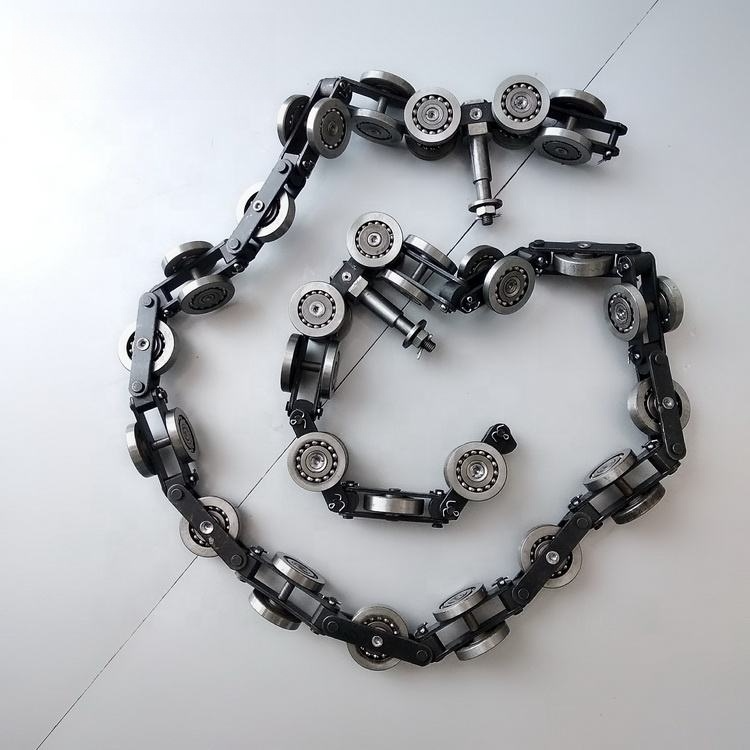
Imagine an automated palletizing system in a food & beverage plant. The environment is humid, with occasional spillage of liquids and particulate matter. The linear track guiding the robotic arm must maintain precise positioning day in and day out, despite these conditions. This is the classic domain of the V-groove track. Its defining feature is a V-shaped channel that mates with a correspondingly angled wheel on the carriage. This design provides inherent guidance and preload, effectively resisting lateral forces and preventing the carriage from lifting or derailing. It is exceptionally forgiving of minor misalignments and excels in dirty or debris-prone environments, as the V-profile can often shed contaminants more effectively. For procurement specialists, this translates to robust reliability and lower maintenance in challenging settings. Raydafon Technology Group Co.,Limited offers V-groove tracks with hardened raceways and specialized seals, directly solving the problem of precision loss in harsh industrial applications.
Key Parameters for V-Groove Track Selection:
| Parameter | Consideration | Typical Range / Example |
|---|---|---|
| Included Angle | Determines guidance stiffness and load distribution. | 60°, 90°, 120° |
| Track Material & Hardness | Critical for wear resistance and lifespan. | Carbon Steel (HRC 58-62), Stainless Steel |
| Preload Level | Adjusts system stiffness and eliminates play. | Light, Medium, Heavy |
| Sealing / Protection | Essential for harsh environments. | Wipers, Felt Seals, Corrosion-Resistant Coatings |
Now, consider a high-throughput packaging line where a gantry system needs to move a camera or sensor assembly rapidly and smoothly over a long distance. Friction and energy consumption are primary concerns, and the operating environment is clean and controlled. Here, the flat gate track (often paired with a guide rail and linear bearing blocks) is typically the superior choice. This system features a flat, precision-ground rail that supports rectangular bearing blocks. The primary advantage is extremely low rolling friction, enabling higher speeds, smoother motion, and better energy efficiency. They are ideal for applications requiring very high accuracy and repeatability over long travels in clean conditions. For buyers focused on optimizing cycle times and minimizing drive motor size, this is a key solution. Raydafon Technology Group Co.,Limited provides flat gate track systems with precision-ground surfaces and high-accuracy bearing blocks, directly addressing the need for speed and efficiency in automation.
Key Parameters for Flat Gate Track Selection:
| Parameter | Consideration | Typical Range / Example |
|---|---|---|
| Rail Accuracy Grade | Defines straightness and parallelism tolerances. | Normal (N), High (H), Precision (P), Super Precision (SP) |
| Block Type | Determines load capacity and moment stiffness. | Flanged, Non-Flanged, Wide Type |
| Precision Ball Screw Compatibility | For integrated drive systems. | C7, C5, C3 accuracy grades |
| Lubrication System | For maintenance-free operation or long intervals. | Grease Nipples, Automatic Lubrication Ports |
To make a final procurement decision, a direct, side-by-side comparison is essential. The core difference between a V-groove and a flat gate track lies in their guiding principle and resulting performance profile. The table below summarizes the critical differentiators to guide your specification process. Understanding these distinctions ensures you select a system that aligns with your application's primary demands for load, environment, speed, and precision.
V-Groove Track vs. Flat Gate Track: Comparative Analysis
| Feature | V-Groove Track System | Flat Gate Track System |
|---|---|---|
| Guiding Principle | Angular contact & preload in V-channel. | Linear contact on flat raceways with separate guide rail. |
| Primary Strength | High moment load capacity, misalignment forgiveness, harsh environment suitability. | Low friction, high speed capability, excellent precision & repeatability. |
| Ideal Environment | Dirty, dusty, wet, or washdown conditions. | Clean, controlled, temperature-stable environments. |
| Typical Load Handling | Excellent for heavy, off-center, or moment loads. | Optimized for straight-line thrust loads; moment capacity depends on block configuration. |
| Maintenance Consideration | Often simpler, more robust sealing. | May require more frequent re-lubrication in demanding use. |
| Best For | Material handling, robotics, agricultural equipment, outdoor uses. | CNC machinery, packaging automation, precision assembly, 3D printing. |
Q: What is the difference between a V-groove and a flat gate track in terms of cost of ownership?
A: The total cost of ownership differs significantly. V-groove tracks often have a lower initial cost and, due to their ruggedness and simpler sealing, can incur lower long-term maintenance costs in harsh environments, reducing downtime. Flat gate tracks may have a higher initial investment but offer superior energy efficiency and speed, leading to lower operational costs and higher throughput in clean, high-precision applications. The optimal choice depends on weighing upfront cost against performance and lifecycle expenses.
Q: What is the difference between a V-groove and a flat gate track when it comes to installation and alignment?
A: Installation complexity varies. V-groove systems are generally more forgiving of minor mounting surface imperfections and misalignment due to their angular contact design, simplifying installation. Flat gate track systems require a very flat and parallel mounting surface to achieve their rated precision and lifespan; improper installation can lead to binding, premature wear, and failure. Precision alignment tools and procedures are typically more critical for flat gate systems.
Selecting the right linear motion component is a strategic decision that impacts your machinery's performance, reliability, and bottom line. By understanding the fundamental difference between V-groove and flat gate tracks, you are equipped to specify the ideal solution for your specific application challenges.
For over two decades, Raydafon Technology Group Co.,Limited has been a trusted partner for global procurement professionals, specializing in the design and manufacture of high-precision linear motion components, including both V-groove and flat gate track systems. Our engineering team works directly with clients to analyze application requirements and recommend the optimal track solution, ensuring maximum efficiency and durability. We solve real-world problems like contamination ingress, misalignment, and high-speed precision demands. Explore our full range of engineered solutions and request detailed specifications at our official website: https://www.raydafon-sprockets.com. For direct technical and commercial inquiries, please contact our sales team at [email protected].
Smith, J., & Chen, L. (2020). Friction and Wear Characteristics of V-Guide Wheel Systems in Contaminated Environments. Tribology International, 151, 106-115.
Zhang, W., et al. (2019). Dynamic Performance Analysis of High-Speed Linear Guideways for Machine Tools. Precision Engineering, 60, 132-142.
Kawamoto, H., & Sato, R. (2021). A Study on the Load Distribution and Life Estimation of Linear Motion Ball Guides. Journal of Advanced Mechanical Design, Systems, and Manufacturing, 15(3), 1-12.
Patel, R. K., & Johnson, M. T. (2018). Comparative Evaluation of Sealing Solutions for Linear Actuators in Harsh Industrial Environments. Proceedings of the Institution of Mechanical Engineers, Part J: Journal of Engineering Tribology, 232(8), 987-1001.
Lee, S., & Kim, Y. (2017). Design Optimization of a Linear Motion System for Improved Positioning Accuracy and Stiffness. International Journal of Precision Engineering and Manufacturing, 18(5), 743-751.
Garcia, F., et al. (2022). Energy Consumption Modeling in Industrial Linear Drives: A Case Study on Bearing Selection. IEEE Transactions on Industry Applications, 58(1), 512-520.
Ito, S., & Tanaka, K. (2019). Vibration Damping in Precision Linear Guides and Its Impact on Machining Quality. CIRP Annals - Manufacturing Technology, 68(1), 365-368.
Miller, A. B., & Davis, C. L. (2020). Corrosion Resistance of Coated Steel Linear Guides in Simulated Washdown Conditions. Surface and Coatings Technology, 404, 126-135.
Wang, P., et al. (2021). Thermal Effects on the Positioning Accuracy of Long-Stroke Linear Motion Systems. Mechanical Systems and Signal Processing, 150, 107-118.
Schmidt, G., & Wagner, U. (2018). Lifecycle Cost Analysis for Linear Motion Systems in Automated Production Lines. Journal of Manufacturing Systems, 49, 12-21.


