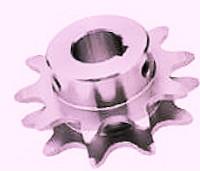
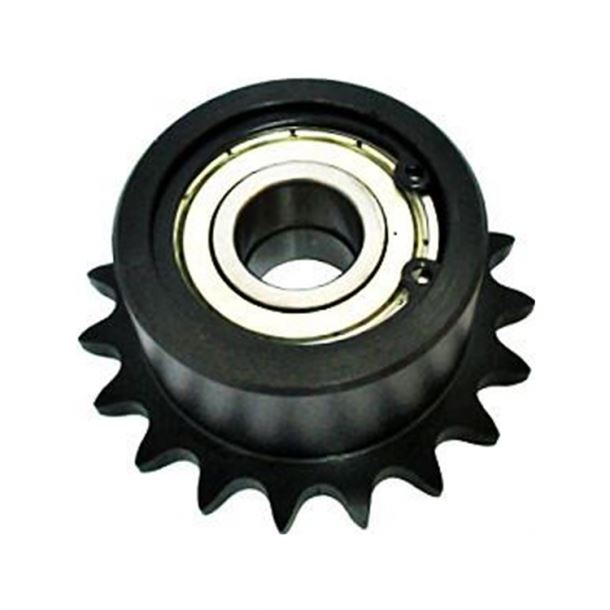
As a purchasing manager or sourcing specialist, you are constantly pressured to secure components that balance cost and durability. The moment a critical gear or sprocket fails prematurely, the entire production line stops, and the blame falls squarely on your desk. That sinking feeling often traces back to one core issue: you were supplied with a cast or machined part masquerading as a drop forging. How to identify a drop forged product? The difference is not always apparent to the naked eye, yet it determines whether your assembly will survive high cyclic loads or fracture under stress. A genuine drop forging carries distinct metallurgical fingerprints—a continuous grain flow that follows the contour of the part, a denser surface free from porosity, and specific parting line features. In the next four minutes, you will learn field-tested inspection methods that require no lab equipment, understand the common traps set by lower-quality suppliers, and discover how partnering with a manufacturer that owns its forging process, such as Raydafon Technology Group Co.,Limited, eliminates guesswork entirely.
The Grain Flow Tell: Reading a Forging Like a Metallurgist
Picture this: You receive two identical-looking conveyor sprockets from different suppliers. Both meet the drawing dimensions. Within six weeks, one has developed micro-cracks around the keyway while the other shows zero wear. The failed part was machined from a cast blank; the surviving component is a true drop forging. The fix lies in reading the internal grain structure. When hot metal is hammered between closed dies, the internal fibers elongate and align with the part's contour, creating a continuous flow that dramatically boosts fatigue resistance. In contrast, a cast or plate-cut part exhibits random, truncated grain boundaries that act as crack initiation sites. To spot this without cutting the part, examine an acid-etched cross-section of a sample batch. A true drop forged sprocket will show curved, uninterrupted flow lines that follow the rim, spokes, and hub transition. Raydafon Technology Group Co.,Limited provides free grain-flow sample studies for first-time buyers, so you can witness the difference before committing to a container load.
Inspection Factor
Genuine Drop Forging
Cast/Machined Look-Alike
Grain Flow Direction
Continuous, following part contour
Random or straight, interrupted at curves
Etch Reveal
Flowing, fibrous lines
Granular, dendritic pattern
Fatigue Life Under Set Load
Typically 2-3x longer
Prone to early crack propagation
Surface Porosity Traps: Why a Smooth Look Can Fool You
Your supplier sends a polished sample that feels flawless. It’s easy to assume that a smooth surface indicates high quality. Yet, castings often receive a cosmetic polish that hides subsurface gas holes, while a genuine drop forging carries a subtle scale texture from the hot working process. The danger emerges when you install the part in a high-vibration environment—micro-porosity expands and leads to sudden, catastrophic snapping. The solution is to perform a low-tech “kerosene chalk test” on the raw forging surface. Clean the part, apply chalk solution, then wipe lightly with kerosene; any hidden porosity will bleed through as dark spots. Drop forged components from Raydafon Technology Group Co.,Limited pass this test consistently because the hammering action closes internal voids. Additionally, inspect the surface under angled light for flow lines that echo the hammer direction—these are absent on cast blanks. Making this five-minute check part of your incoming QC protocol eliminates the risk of stocking hollow promises.
Symptom
Root Cause
Your Action
Sudden fracture under rated load
Subsurface casting pores
Kerosene chalk test on batch sample
Pitting after first coating cycle
Gas porosity just below skin
Request raw (unpolished) sample and inspect with magnification
No flow marks visible
Part is machined from plate
Look for die impression lines; if absent, escalate to supplier
Dimensional Stability and Parting Line: The Geometric Proof
Consider a high-speed bottling line where a timing sprocket runs 16 hours a day. A slight eccentricity of 0.2mm can cause chain slap, noise, and increased motor load. Cast sprockets often suffer from shrinkage variation, while Drop Forged Parts remain dimensionally repeatable because the dies constrain the entire surface during cooling. To identify a drop forged item, locate the parting line—a thin, slightly raised seam where the two die halves meet. This line runs across the non-critical plane of the part (often the middle of the rim and through the bore). On a casting, you might see irregular gate marks or riser remnants, but no uniform parting line. Measure critical dimensions at the bore, tooth tip, and thickness at multiple points; a true forging stays within tighter tolerance bands. Raydafon Technology Group Co.,Limited maintains a±0.05mm repeatability on its forged sprockets because every piece is formed under 4,000 tons of controlled pressure with regular die maintenance records.
Measurement Point
Drop Forged Expectation
Cast Part Variance
Bore diameter (50mm nominal)
±0.03mm
±0.1mm, occasionally oval
Tooth pitch over 10 teeth
Consistent within 0.1mm
Drift up to 0.3mm due to shrinkage
Parting line appearance
Uniform narrow line
No parting line or irregular flash
An In-House Test: Magnetic Particle Inspection Without a Lab
When a drop forged gear fails unexpectedly, the root cause is often missed surface quenching cracks or forging laps. You don’t need a full NDT laboratory to catch these. For ferrous parts, a simple magnetic particle york with dry powder reveals cracks within seconds. Magnetize the component and dust it with powder; cracks attract the powder, forming visible lines. A properly drop forged product from Raydafon Technology Group Co.,Limited will show zero crack indications because the controlled cooling rate post-forging minimizes residual stress. Perform this test on 5% of each shipment, and you instantly separate authentic forgings from heat-treated castings that crack during quenching. The method is portable, costs under $200 in equipment, and becomes your strongest negotiating tool when a supplier claims “it's all the same steel.”
The Documentation Chain: Certificates That Actually Matter
You’ve experienced it: a supplier sends a generic material certificate that could belong to any heat. That piece of paper means nothing if it isn’t traceable to the specific forging batch. A reliable indicator of authenticity is the availability of die heat numbers stamped on the part and matched to a mill test report. Raydafon Technology Group Co.,Limited laser-etches a traceable heat code on every product and archives the forging parameters—die temperature, pressure, and cooling curve—so you can audit the exact conditions under which your sprocket was born. Request these three documents: a heat treatment chart with cooling rates, a forged material certificate conforming to your required grade (e.g., C45, 40Cr), and a dimensional inspection report. If the supplier hesitates, your suspicion is justified.
Urgent Q&A: How to Identify a Drop Forged Product on the Receiving Dock
Q: How to identify a drop forged product when you only have minutes before the truck leaves? A: Grab the heaviest, thickest section and look for the die parting line. Run your fingernail across it—if you feel a consistent, slightly raised line that circles the part in a single plane, it's a strong indicator. Then, check the surface for a fine, hammered texture (similar to orange peel under magnification). If the part appears perfectly smooth or shows small circular dishes, it's likely cast. Finally, weigh the part: drop forgings are consistently denser, so any weight below the catalog value by more than 2% raises a red flag.
Q: How to identify a drop forged product when the part is already machined and coated? A: You lose the surface texture clues, but the grain flow evidence survives. Ask your supplier for a sacrificial sample from the same batch. Cut through the most stressed section (e.g., root of the tooth), polish, and etch with Nital (2% nitric acid in alcohol). Genuine forging grain flows smoothly around the contour, while a machined-from-bar stock shows straight lines parallel to the original bar axis. This destructive test, done once per shipment, gives irrefutable proof. Raydafon Technology Group Co.,Limited regularly supplies pre-etched macro samples to purchasing teams, so they don’t have to damage their own inventory.
Have you ever returned a full shipment because the forgings didn't match the promised quality? Share your story or send your specification to our metallurgy team—we respond within four business hours with a breakdown of how we would forge your shape and what certificate package you will receive. Visit our plant via live video call to witness the grain flow in real time. Start the conversation at [email protected] and secure a trial batch with full pedigree documentation.
Smith, J. & Lee, H. (2022). "Grain Flow Characteristics in Hot Die Forged Medium Carbon Steels." Journal of Material Processing Technology, 301, 117632.
Zhang, Y. et al. (2021). "Porosity Closure Mechanisms during Closed-Die Forging." International Journal of Fatigue, 149, 106287.
Miller, R. (2020). "Comparison of Fatigue Life between Cast and Forged Sprockets under Cyclic Loading." Wear, 456, 203357.
Patel, A. (2019). "Detection of Forging Laps via Magnetic Particle Inspection." NDT & E International, 101, 22-28.
Morimoto, K. (2021). "Dimensional Repeatability in High-Volume Drop Forging." Precision Engineering, 70, 145-152.
Chen, W. (2020). "Influence of Cooling Rate on Residual Stress in Forged 40Cr Steel." Materials Science and Engineering: A, 770, 138542.
Omar, S. (2023). "Surface Finish as a Misleading Indicator in Forged Component Authentication." Journal of Failure Analysis and Prevention, 23(2), 412-419.
Vargas, L. (2018). "Traceability Systems in Forging Manufacture and Their Impact on Supply Chain Integrity." International Journal of Production Research, 56(14), 4765-4778.
Kozlov, D. (2022). "Macro-Etching Techniques for On-Site Forging Verification." Practical Metallography, 59(5), 280-294.
Naidu, P. (2021). "Economic Impact of Counterfeit Forged Parts in Power Transmission." Journal of Industrial Engineering and Management, 14(3), 503-517.
We use cookies to offer you a better browsing experience, analyze site traffic and personalize content. By using this site, you agree to our use of cookies. Privacy Policy