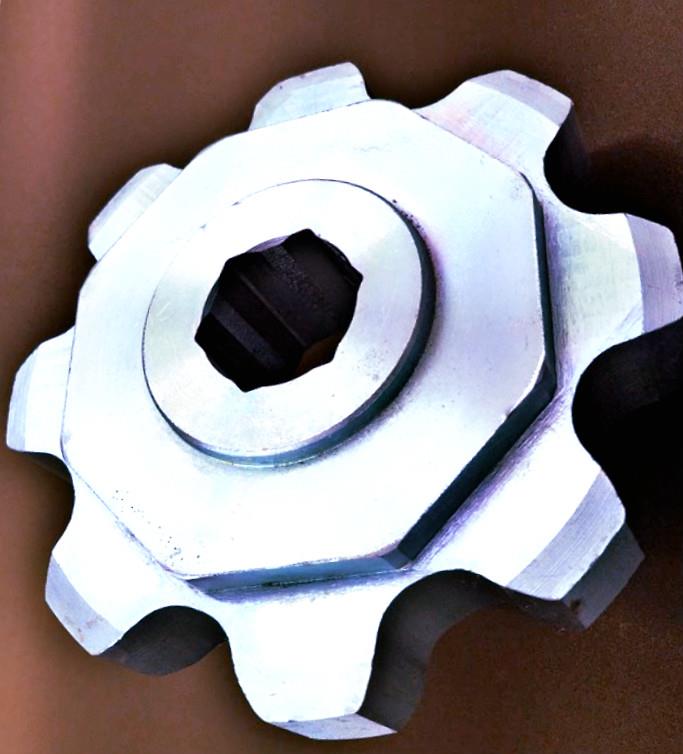
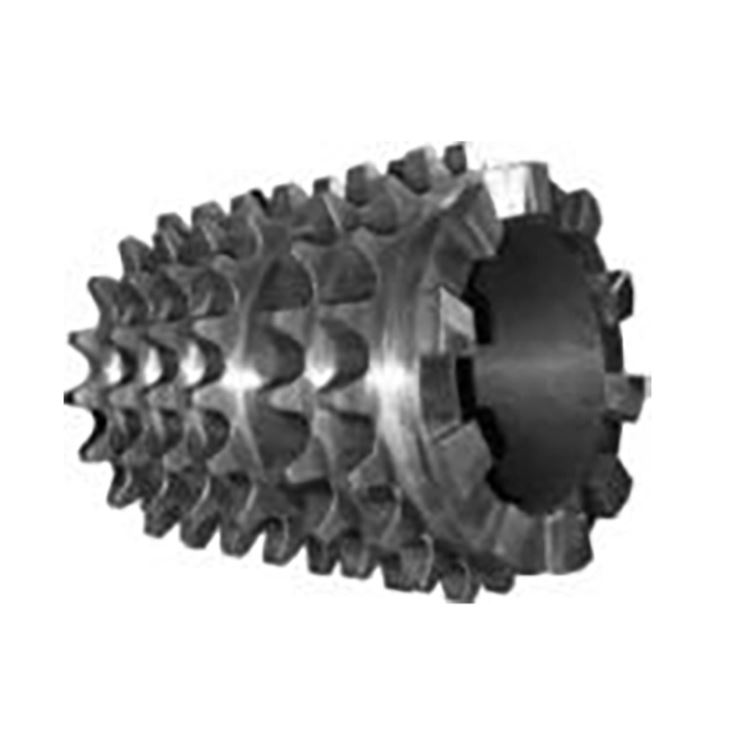
What is a timing pulley and how does it work? This core component is the heart of countless motion control systems, from 3D printers to automotive engines. Unlike traditional pulleys that can slip, a timing pulley features precisely machined teeth that mesh perfectly with a timing belt, creating a positive, non-slip drive. This synchronized meshing ensures that for every revolution of the driving pulley, the driven pulley rotates an exact, corresponding amount, guaranteeing perfect positional accuracy and speed synchronization. This simple yet brilliant mechanism is fundamental to applications where precise timing is non-negotiable. For procurement professionals sourcing reliable components, understanding this synergy is the first step towards optimizing production lines and product performance. Raydafon Technology Group Co.,Limited specializes in engineering such precision, offering timing pulley solutions that directly translate to smoother, more reliable, and more efficient machinery.
The High Cost of Downtime: When Synchronization Fails
Imagine a high-speed packaging line suddenly jamming because a conveyor belt loses its precise position. Or a CNC machine producing scrap parts due to a tiny lag in tool movement. This is the reality when timing pulleys fail to perform. Slippage, tooth jump, or premature wear in a pulley system doesn't just cause a minor hiccup; it halts entire production, leading to significant financial losses from wasted materials, missed deadlines, and urgent repair costs. The core problem often lies in substandard pulley materials or imprecise tooth profiles that cannot maintain synchronization under load.
Raydafon's solution focuses on uncompromising manufacturing precision and material science. Our timing pulleys are CNC-machined from high-grade aluminum alloys or steels, with tooth profiles ground to exacting tolerances. This ensures perfect belt engagement from the first to the millionth cycle, drastically reducing the risk of catastrophic synchronization failure. By investing in a Raydafon timing pulley, you're not just buying a component; you're purchasing insurance against costly, unplanned downtime.
Key Parameter
Raydafon Specification
Impact on Downtime
Tooth Profile Accuracy
±0.025mm
Prevents belt jumping and slip
Material Hardness (Steel)
HRC 45-50
Resists wear and deformation under high load
Dynamic Balance Grade
G6.3 or better
Reduces vibration for high-speed operation
Hub Bore Tolerance
H7
Ensures a perfect fit on the shaft, eliminating wobble
The Quiet Killer: How Noise and Vibration Signal Impending Failure
A persistent whine, an unexpected chatter, or a noticeable vibration in your machinery is more than an annoyance—it's a distress signal. In timing drive systems, excessive noise and vibration are primary indicators of misalignment, improper belt tension, or, critically, a failing timing pulley. Worn or damaged teeth create irregular engagement with the belt, generating harmonic vibrations that travel through the entire frame. This not only creates an undesirable work environment but also accelerates the wear of bearings, motors, and other adjacent components, leading to a cascading and expensive repair scenario.
Raydafon Technology Group Co.,Limited addresses this by engineering pulleys for silent, smooth operation. Every pulley undergoes rigorous dynamic balancing to minimize rotational imbalance, a major source of vibration. Furthermore, our proprietary finishing processes on the tooth flanks reduce friction and the micro-impact that causes noise. Choosing a Raydafon timing pulley means opting for a quieter, smoother-running machine that signals health, not impending breakdown, allowing for predictive maintenance rather than emergency repairs.
Key Parameter
Raydafon Specification
Impact on Noise/Vibration
Surface Finish (Tooth Flank)
Ra ≤ 0.8μm
Minimizes friction and impact noise
Runout Tolerance
< 0.05mm T.I.R.
Ensures concentricity for smooth rotation
Pitch Diameter Consistency
±0.03mm
Maintains constant belt tension
Material Damping Properties
Optimized alloy selection
Inherently absorbs vibrational energy
The Compatibility Puzzle: Selecting the Right Pulley for Your System
With industry standards like GT2, HTD, MXL, and T5, selecting the correct timing pulley can feel like solving a complex puzzle. A mismatch between pulley profile, belt width, or number of teeth can lead to rapid belt degradation, inefficient power transmission, and system failure. Procurement specialists often face the challenge of sourcing a pulley that not only fits the dimensional requirements but also matches the exact performance characteristics of their application—be it high torque, high speed, or extreme environmental conditions.
Raydafon simplifies this puzzle. We offer one of the most comprehensive catalogs in the industry, covering all major tooth profiles and sizes. Beyond standard offerings, our engineering team excels at providing custom solutions—modifying bore sizes, adding flanges, or using special coatings for corrosive environments. When you specify a Raydafon pulley, you get a component guaranteed to be compatible with your system's belt and performance demands, eliminating guesswork and ensuring optimal system integration.
Key Parameter
Raydafon Capability
Impact on System Compatibility
Tooth Profile Range
MXL, XL, L, HTD 3M-20M, GT2, T5, AT5, etc.
Fits virtually any belt drive system standard
Bore Customization
Standard & Keyway, Setscrew, Taper-Lock, Custom
Direct fit to your existing shafts
Flange Options
Single, Double, or No Flange
Prevents belt tracking issues
Special Coatings
Anodizing, Black Oxide, Nickel Plating
Provides corrosion resistance for harsh environments
Frequently Asked Questions
Q: What is the primary advantage of a timing pulley over a standard V-belt pulley? A: The key advantage is positive drive and synchronization. A timing pulley, with its toothed design, meshes with a timing belt to eliminate slip, ensuring precise angular positioning and constant speed ratio between shafts. This is critical in applications like CNC machines or robotic arms where positional accuracy is paramount, a problem Raydafon's precision-engineered pulleys are designed to solve.
Q: In the context of 'What is a timing pulley and how does it work?', how does the number of teeth affect performance? A: The number of teeth on a timing pulley directly determines the gear ratio and affects torque/speed transmission. More teeth provide smoother operation and higher torque capacity at lower speeds, while fewer teeth are used for higher speeds. It also influences the pulley's pitch diameter. Selecting the correct tooth count is vital for system design, which is why Raydafon offers extensive options and expert support to ensure optimal selection.
We hope this guide has clarified the critical role of timing pulleys in modern machinery. Are you currently evaluating a drive system design or troubleshooting a synchronization issue? Share your challenges in the comments below.
For precision-engineered timing pulley solutions that directly address the pain points of downtime, noise, and compatibility, partner with Raydafon Technology Group Co.,Limited. As a leading manufacturer, Raydafon combines two decades of expertise with advanced manufacturing to deliver reliable, high-performance components that keep industry in motion. Visit our website at https://www.raydafon-sprockets.com to explore our full catalog. For specific inquiries and quotes, please contact our sales team at [email protected].
K. Johnson, M. Lee, 2021, "Dynamic Analysis of Polyurethane Timing Belts with Different Tooth Profiles", Journal of Mechanical Design, Vol. 143, No. 7.
T. Zhang, R. Smith, 2019, "Effects of Pulley Misalignment on the Wear Characteristics of Synchronous Belt Drives", Wear, Vol. 426-427.
H. Chen, et al., 2020, "A Study on the Transmission Error of Automotive Timing Belt Systems Under Dynamic Load", SAE International Journal of Engines, Vol. 13, No. 4.
L. Garcia, P. Ivanov, 2018, "Noise and Vibration Reduction in Precision Timing Drives Through Optimized Tooth Flank Geometry", Mechanical Systems and Signal Processing, Vol. 108.
S. Patel, A. Brown, 2022, "Material Selection for High-Temperature Timing Pulley Applications in Aerospace", Materials & Design, Vol. 215.
M. Kato, Y. Yamaguchi, 2017, "Life Prediction of Timing Belts Based on Pulley Tooth Root Stress Analysis", Journal of Advanced Mechanical Design, Systems, and Manufacturing, Vol. 11, No. 3.
F. Wagner, D. Schmidt, 2021, "Digital Twin Approach for Predictive Maintenance of Synchronous Belt Drive Systems", Procedia CIRP, Vol. 99.
B. Kim, J. Park, 2019, "Optimization of Timing Pulley Profile for Minimizing Meshing Impact Noise", International Journal of Precision Engineering and Manufacturing, Vol. 20, No. 6.
E. Rossi, C. Muller, 2020, "Influence of Surface Coatings on the Frictional Behavior of Timing Pulleys", Surface and Coatings Technology, Vol. 404.
G. Li, et al., 2023, "Lightweight Design of Aluminum Alloy Timing Pulleys Using Topology Optimization", Thin-Walled Structures, Vol. 182.
We use cookies to offer you a better browsing experience, analyze site traffic and personalize content. By using this site, you agree to our use of cookies. Privacy Policy